
Jomo Kenyatta’s Legacy: Kenya’s Liberator or Its First Oppressor?
A long-form examination of land, power, political violence, the Mau Mau question, and why Kenya’s founding years still shape the present.

Jomo Kenyatta did not walk into history quietly. Released from colonial detention with a fly whisk in hand, he became the embodiment of a people’s longing for dignity, land, and freedom. Independence in 1963 felt like a door flung open.
But when Kenyatta died in 1978, Kenya was also a nation learning to fear its own state: unresolved political assassinations, shrinking opposition space, coercive policing, and a land system that promised restoration but often delivered privilege.
- Kenyatta was central to independence and early stability.
- Land redistribution often became patronage rather than restorative justice.
- Political violence and repression occurred under his presidency, even when direct orders were not proven.
- The “imperial presidency” template shaped later Kenyan politics.
Independence and the Promise of Land
For many Kenyans, independence was not mainly about flags or ceremonies. It was about land. Colonial rule had dispossessed communities, pushed families into reserves, and turned fertile soil into a privilege controlled by settlers and their systems. The liberation struggle carried a simple promise: that the stolen foundations of life would be restored.
Land Redistribution Under Kenyatta: Where the Revolution Quietly Died
At independence, millions expected land justice. Yet post-1963 redistribution leaned heavily toward purchase-based schemes and administrative discretion. That sounds orderly until you ask: who had money, paperwork, and access in a young country where most people were poor?
In practice, land increasingly became political currency. Deals were made behind closed doors. The well-connected moved first. The landless moved last—if they moved at all. For many Mau Mau veterans, that outcome felt like the liberation story turning against its authors.
Ethnic Power and Political Belonging
Kenya needed a shared national identity after independence. Instead, early politics hardened into ethnic arithmetic: who is close to State House, who is trusted, who is rewarded, and who is expected to wait.

The political rupture between Kenyatta and Oginga Odinga—who had stood with him in the independence struggle—signaled a deeper shift: opposition was increasingly treated not as legitimate disagreement, but as danger.
Assassinations and State Violence: Fear Enters the Republic
Pio Gama Pinto (1965)
Kenya’s first major post-independence political assassination. Convictions happened, but questions persisted. Regardless of who ordered it, the meaning was seismic: politics could now end in bullets.
Tom Mboya (1969)
Tom Mboya was brilliant, globally connected, and widely seen as a possible successor—exactly the kind of figure who attracts both admiration and enemies. When he was assassinated, the nation’s faith in a clean post-independence future took a direct hit.
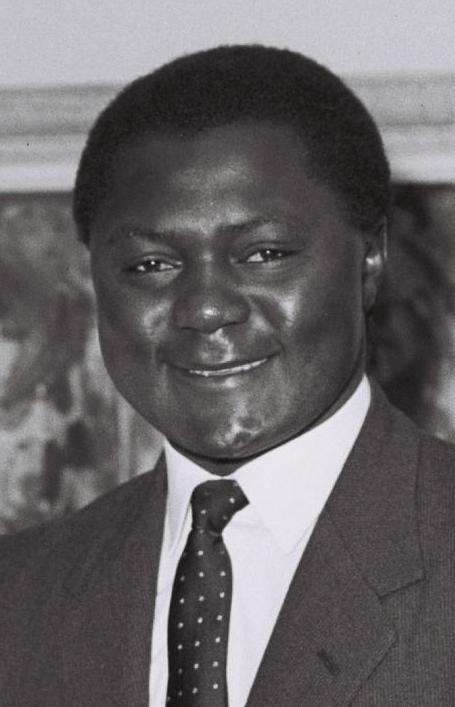
Kisumu (1969): When the State Fired Into the Crowd
Kenyatta’s visit to Kisumu in October 1969—meant to showcase development—became one of the darkest episodes of his presidency. The crowd turned hostile. Stones were reportedly thrown. Security forces opened fire on civilians. The death toll remains disputed, but the political lesson was unmistakable: the state could kill openly, and accountability could still fail to follow.
The Mau Mau Betrayal
No contradiction cuts deeper than Kenyatta’s relationship with the Mau Mau. The fighters who carried the most dangerous burden of resistance expected recognition and justice—especially land. Instead, many veterans remained marginalized for decades, while the movement remained politically inconvenient.

Conclusion: Liberator and Oppressor
If you insist on one label, you will miss Kenya’s real story. Kenyatta helped end colonial rule—liberator. But he also presided over a system that centralized power, rewarded loyalists, sidelined veterans, and normalized coercion—oppressor.
The real question is not only who Kenyatta was. The real question is whether Kenya will keep living inside the political architecture built in the founding years—or finally dismantle it.
Was Kenyatta’s approach necessary for stability—or did it plant the seeds of Kenya’s political problems? Share your view respectfully in the comments.
FAQ (for Google + readers)
Why is Kenyatta called Kenya’s founding father?
He led the first post-independence government and shaped the early state and its institutions.
Did Kenyatta personally order assassinations?
In many cases, direct orders were never proven publicly. The stronger historical argument is that violence occurred under his presidency with limited accountability.
Why is the land question still central today?
Because land allocation, ownership, and displacement remain tied to inequality, identity, and political competition.
Note on photo reuse: The images used above are pulled from Wikimedia Commons-hosted files (upload.wikimedia.org) with reuse-friendly licensing as indicated on their file pages.


Comments
Post a Comment